X-Wing
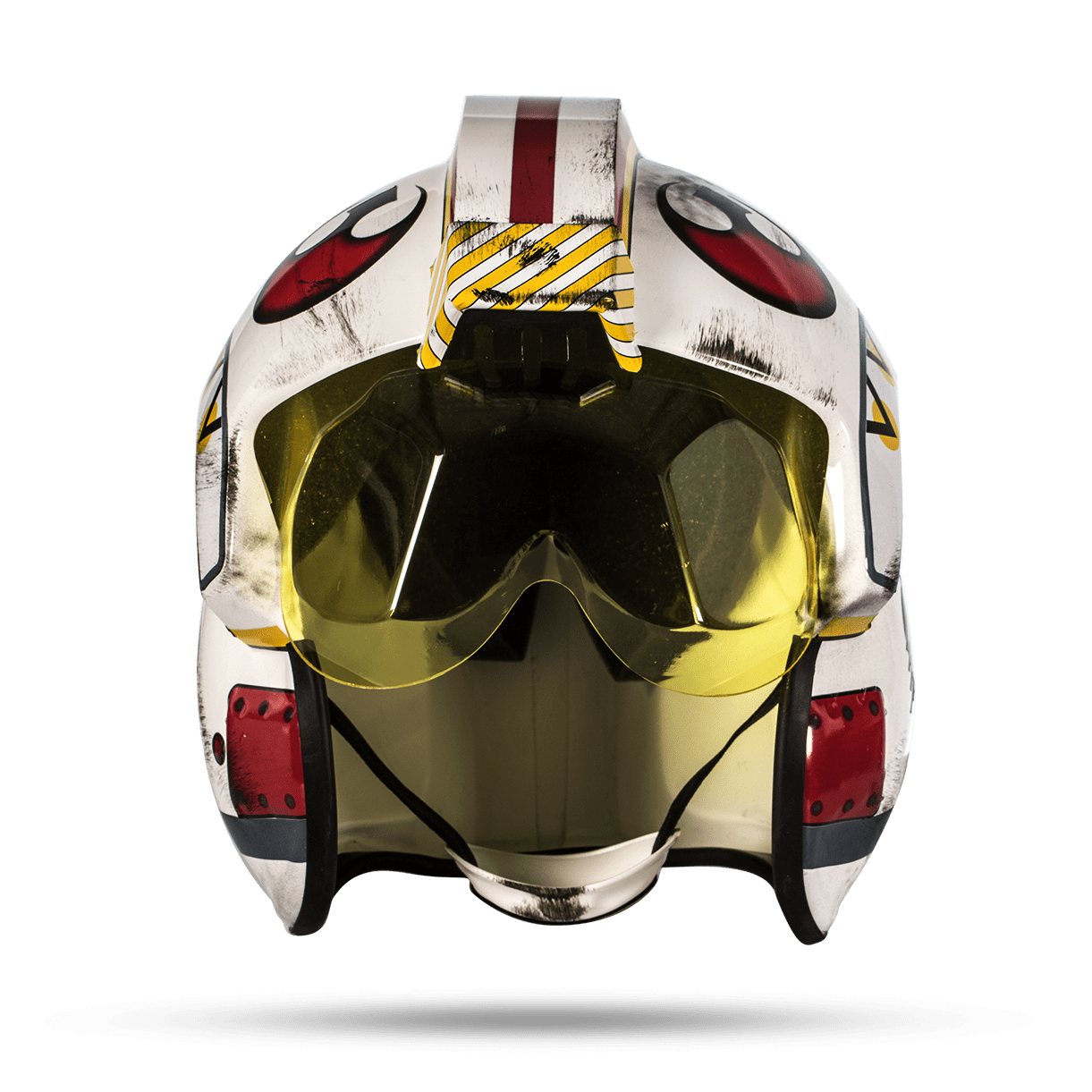
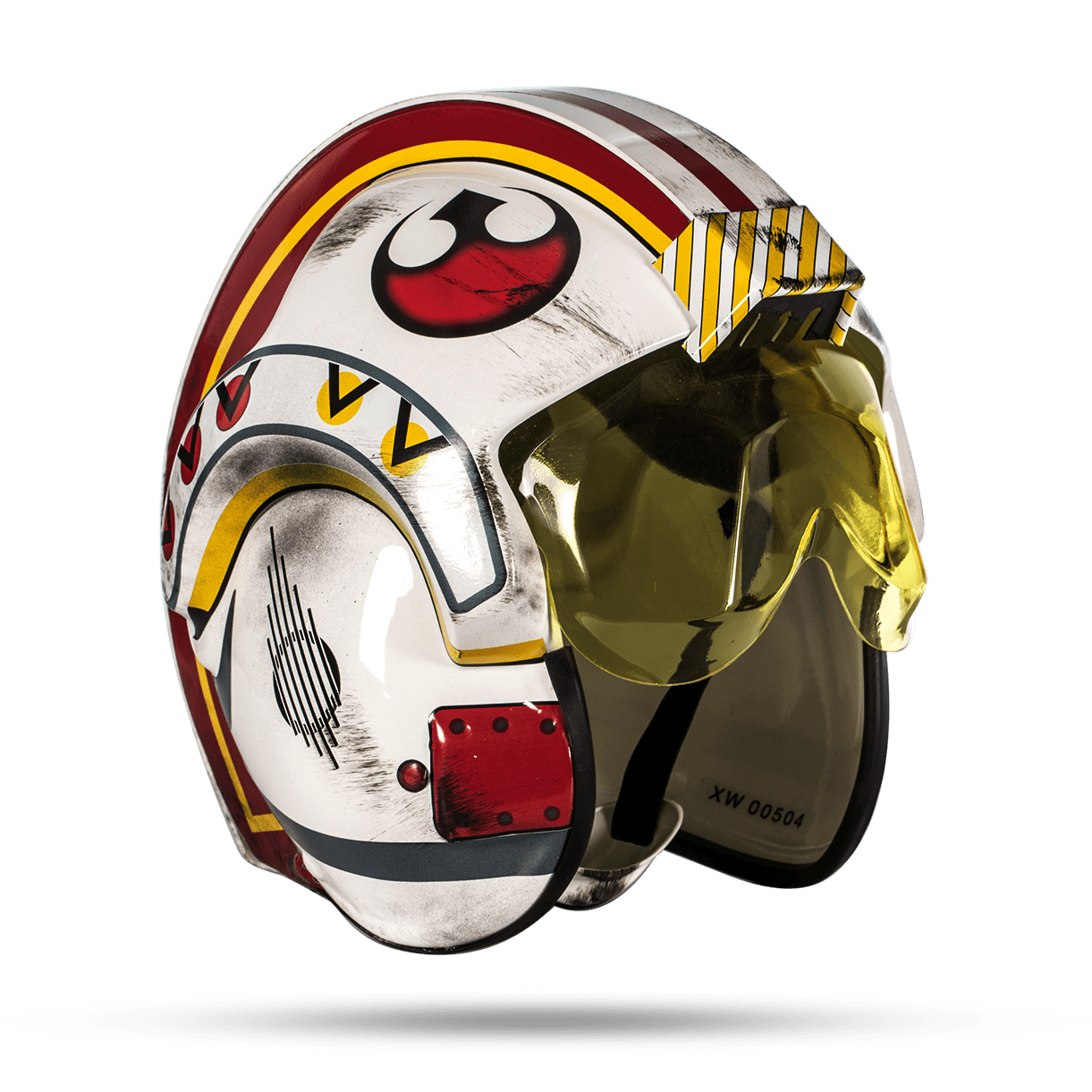
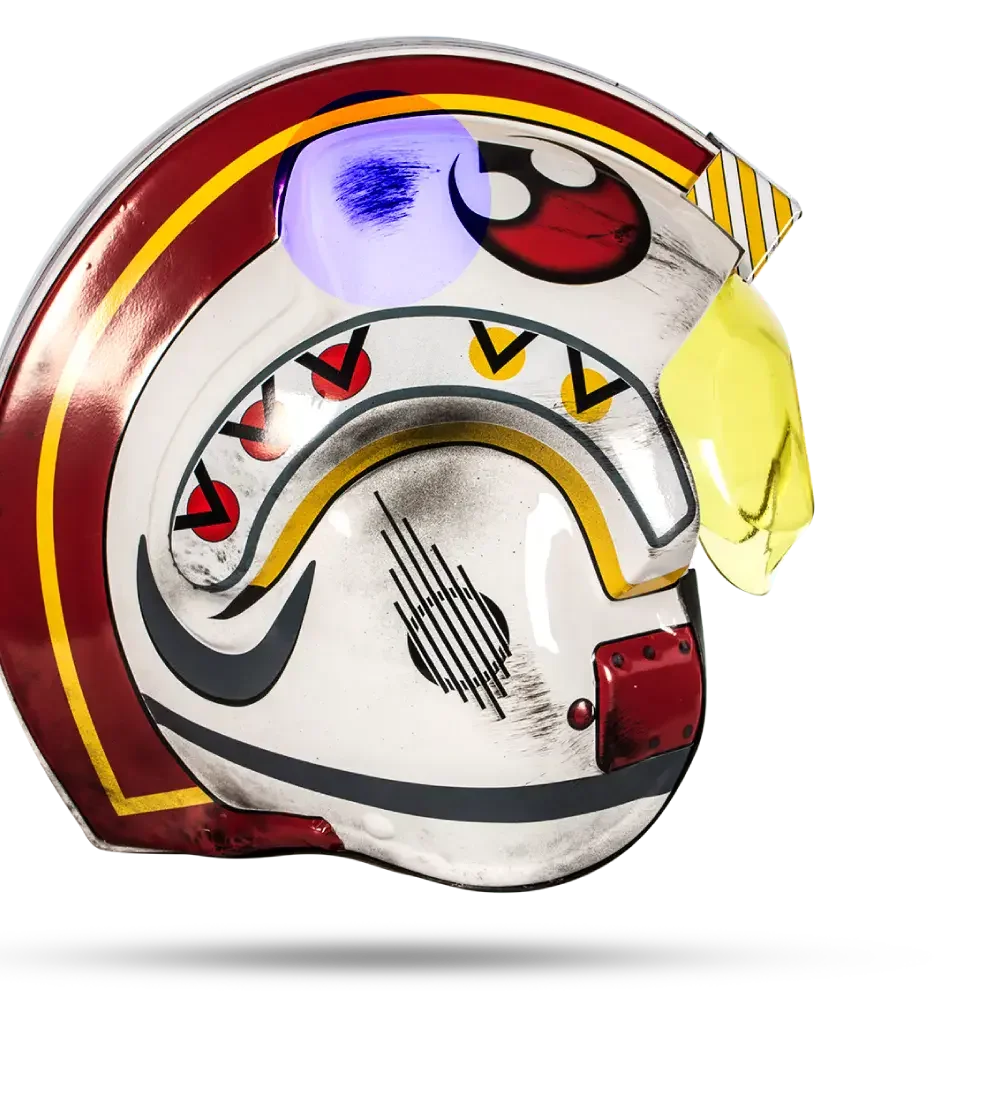
The X-Wing Pilot Helmet was created for Star Wars: Episode IV - A New Hope in 1976 and manufactured by Andrew Ainsworth at Shepperton Design Studios. Worn by Rebel Alliance starfighter pilots, the helmet combined a practical aviation-inspired design with distinctive squadron markings, becoming one of the defining symbols of the Rebel forces during the Battle of Yavin.
Manufactured using vacuum forming techniques from high-impact polystyrene (HIPS), each helmet was hand trimmed, assembled and finished using the original production methods. Individual helmets were hand painted to represent different pilots and squadrons, resulting in unique markings and weathering that reflected the handcrafted nature of the original film production.
Inspired by contemporary military flight helmets, the X-Wing Pilot Helmet blended real-world aviation influences with the visual language of science fiction. Its distinctive shape, external fittings and personalised decoration have made it one of the most recognisable pieces of Rebel costume design, remaining an enduring icon of the original Star Wars film and the craftsmanship of Andrew Ainsworth at Shepperton Design Studios.
SCARRED
“BATTLE READY...”
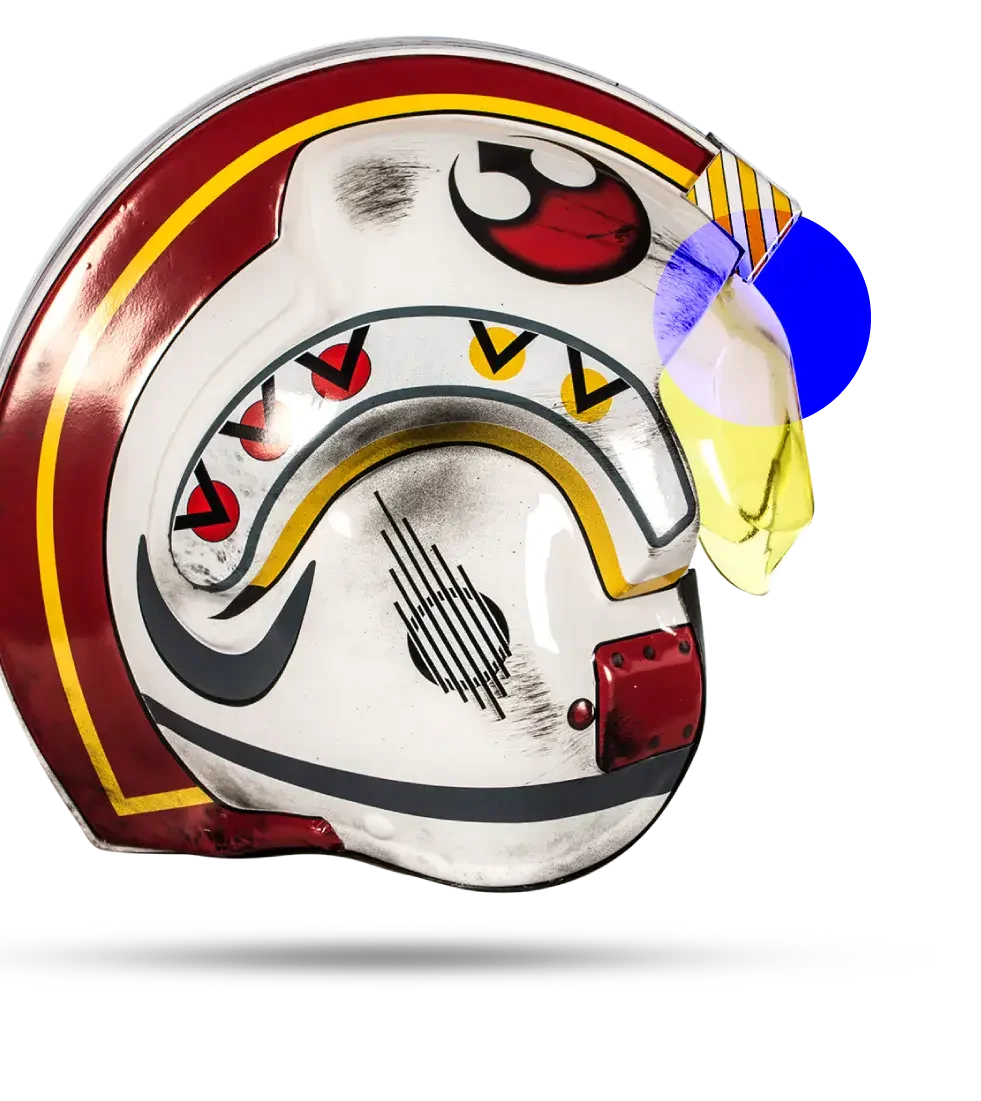
John Mollo (Costume Designer) asked Andrew to produce a futuristic pilot helmet based roughly on a conventional pilots helmet. In 1976 ‘Heads Up Display’ was only a dream, so Andrew created facet lenses to make this feature come to life.
FACET
“LENSE REVEALS ALL...”
Exposing the pilots faces and theoretically allowed them to read information “heads up” from the inside. The lenses were vacuum formed form transparent yellow cast Acrylic so the clarity was maintained. The impact of the final battle scene from ANH was spectacular and critically each pilot’s face was instantly recognisable.
CROWN
“A COMMANDING POSITION...”
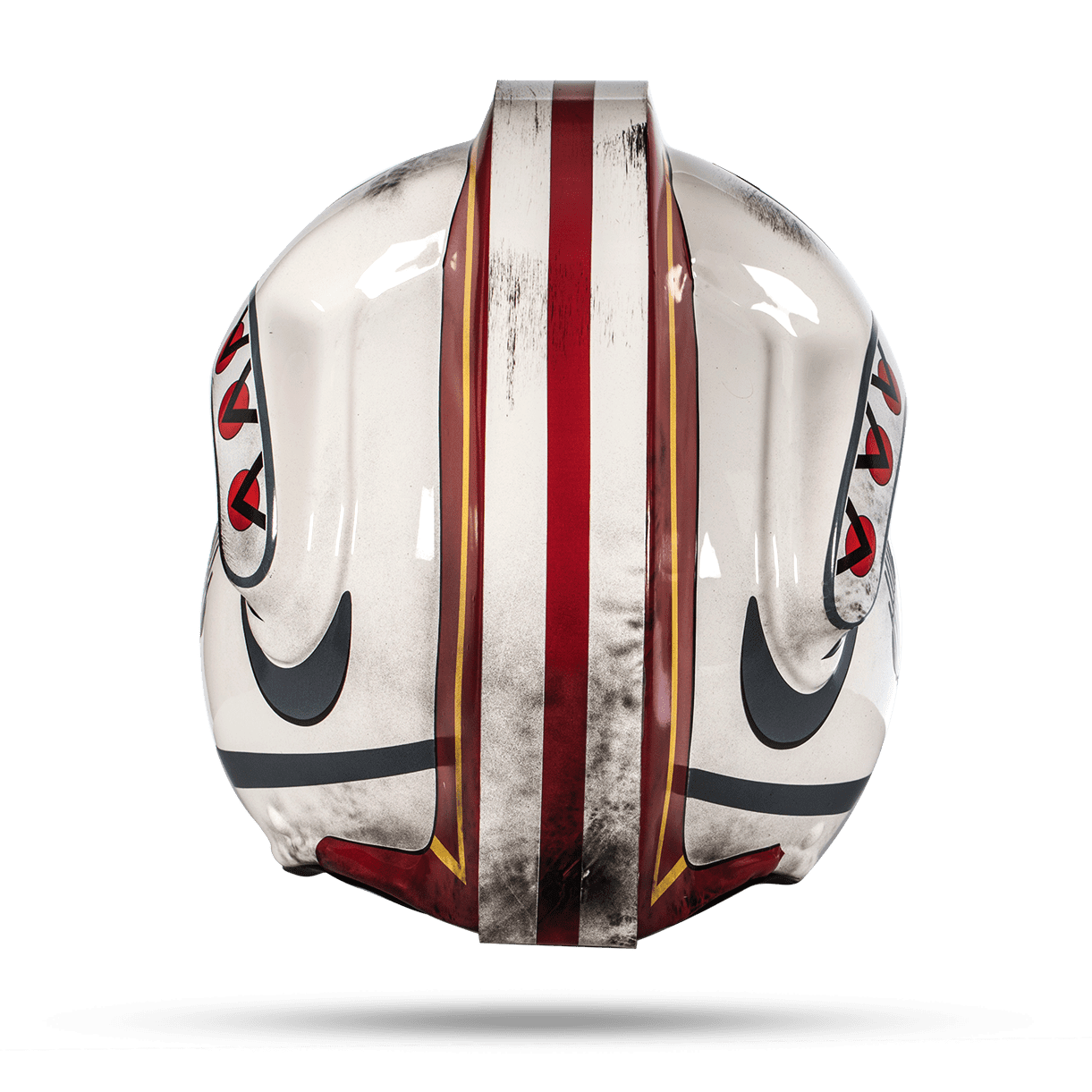
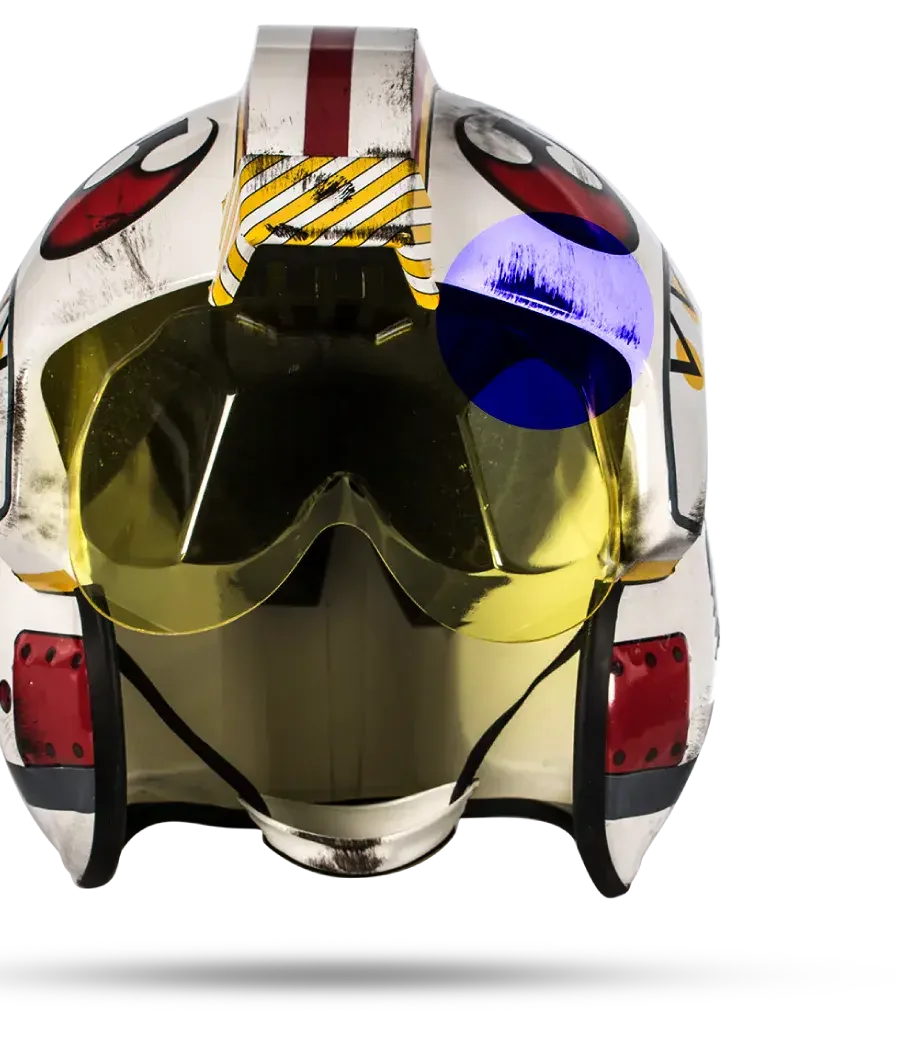
The first prototype design also had a breathing mask which was discarded to reveal the actors face. A high crown enhanced the superiority of the wearer, akin to classical Greek or Roman warriors. The duct created by the crown served to add ventilation to the back of the helmet and increase the internal space accommodating the facet lens.
PAINTED
“LUKE SKY-WALKER’S
SPECIAL EDITION...”
Meticulously hand-painted with attention paid to the small details. Artistically distressed with battle scars and laser damage, but not so much as to render the helmet unwearable.